
Poppy let out a big sigh as her 32-year-old brother Josh said that he had tried her latest suggestion of walking in nature motivation but it hadn’t helped with his fatigue and low motivation. Josh’s big sister had been trying to buoy him up for as long as she could remember, to no effect. She couldn’t remember a time when he was genuinely joyous or thrilled, even when she secretly bought him his favorite video game when he was 11 years old, much to the consternation of their parents. It made Poppy angry and depressed that she failed in making him happy.
He always seemed to live behind an impenetrable shield of pessimism. Was he depressed or was this just his nature?
As a 35-year-old hot social media food influencer Poppy was bouncy, and wanted her brother to be excited too, when they were kids. She was full of humor, acting the clown in her younger days trying to get a spark from Josh. He rarely responded with any energy, pursuing his studies and later becoming a professor of history.

Was he ill with depression or did he have a depressive personality style?
If he was ill with depression why didn’t he get treatment? Was he one of those who were treatment resistant to the usual range of anti-depressants? How come he had no breaks in his depressive states? Poppy’s research indicated that depression comes in cycles and affected eating, sleeping, energy, focusing and engagement. The cycles had to be intense and last at least 2 or more weeks. This didn’t fit for Josh. He never had problems with eating or paying attention to what he needed to do to survive the family and find a place for himself in the world.
Had the medical and mental health professionals failed him and put the burden on her, or was it something about their family? Had she been doing it wrong all along? Were her parents oblivious and uncaring?
What had gone wrong for him that made him into a permanently depressed sort of person?

Disentangling Depression from the Roots of Depressive Personality Style
Poppy remembered the frequent chewing out Josh received from his mother for not taking the dog out for a walk, for accidently breaking a dish, or for wasting food. He usually apologized and tried to compensate by doing a bunch of other chores and anticipating his mother’s needs when his dad was emotionally absent, drowning in alcohol. Josh blamed himself if his mother was in a bad mood. He thought he was selfish if he spent time doing his homework instead of seeing to him mom.
Poppy hated when Josh guilted himself into not having the extra piece of pie; or going out with his class mates to a movie or on a school trip. He never complained, even when it was blatantly obvious that it was his mother that forgot to make dinner rather than his fault for not making sure there were groceries in the refrigerator. He took all the blame for his mother’s anxiety, unhappiness, and poor life experience. Whatever he did to help in the family, he never thought he was good enough, and beat himself up for not trying harder or doing things better.
It made Poppy mad to see it, even though it enabled her to escape the dysfunctional family and find her groove outside by performing for others in ways that caught their attention. It filled her up, made her feel worthwhile and useful. Just a damn shame that she couldn’t be useful to Josh in lifting him up!
Depressive Personality Style Development – Self-sacrifice, and Self-criticism.
One of the most salient features of the depressive personality style is that of self-sacrifice and self-criticism. Josh’s survival tactic in a home with a drunkard and an absent father was to become his mother’s caretaker. He had been her last child and had become symbiotically dependent on him – such that if he was to grow and survive he had to make sure she was okay to facilitate his development. They were symbiotically tied together, entrapping Josh into a mesh of pleasing her and sacrificing himself.
Part of the enmeshment meant he couldn’t enjoy life outside of that symbiotic dyad and it became too threatening to even try it. Being sacrificial brought some masochistic pleasure for Josh, since it wasn’t okay to feel joy any other way – in fact, repressing any sense of joy coming from the outside world through self-denial, and self-criticism became the cloth that wove the fabric of Josh’s personality.
Studying hard and becoming a local history professor didn’t threaten his role as caretaker. In fact it gave him the only entry into an alternate world that didn’t threaten his caretaking dynamics.

Depressive Personality Style Development – Idealization and Guilt
Despising the cruel way in which his father treated his mom and their family, made Josh idealize his mother. She was saintly in contrast with his uncaring and selfish father. Putting mom on a pedestal made Josh feel guilty if he was less than the antidote to his dad. Guilt became his fuel in order to maintain the motivation to protect and care for his perfect mom. Living with constant guilt meant assuming he was inadequate and that every long face his mother put on was because Josh had failed her. Guilt and its use as a whiplash sunk in as a permanent feature of Josh’s depressive personality.
Depressive Personality Style Development – Internalization and Self-Constraint
Taking the responsibility for anything that went wrong was an effective way of making sure his mother never felt bad, ashamed, or guilty. Absorbing his mother’s off moments and blaming himself was a pattern of internalization that became ingrained into Josh’s personality.
There was no point trying anything new as he didn’t deserve it. His mother and some of his teachers whom he idealized were the worthy ones, not him. He was merely an inadequate and flawed character who had failed to rescue his mother and had to deny himself anything other than just making a living.
Poppy’s attempts to cheer him up by inviting him to her social media launches, going to concerts, attending mindfulness or meditation workshops all sunk without a trace. There was no point investing in himself since he wasn’t of value.
Josh grew up with a constant narrative knocking himself down – devaluing his efforts while over valuing his mother and teachers. Mixed in with overpowering guilt and self-blame his personality took on the hue of negative attitude towards engaging in any pleasurable participation in life.
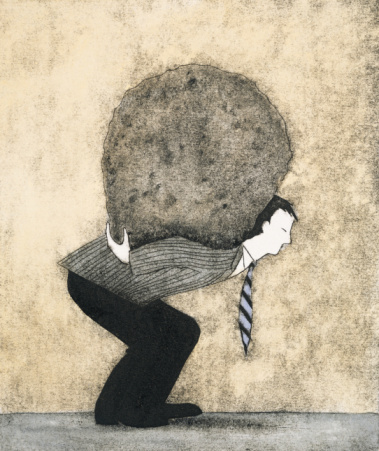
Depressive Personality Style – Repression of Anger, Assertiveness, and Aliveness
Josh took pride in not feeling angry, and therefore not showing anger which would be shameful and make him like his dad. He was unaware that he was disowning his anger in order to keep up his sacrificial self and win love that way. He played the sponge sucking in all the anger from his mother, father, and Poppy and put it in a silo, making them feel holier than thou.
He kept himself safe from accessing it and losing his sacrificial persona using guilt like a guillotine, cutting off his anger, irritation, and dissatisfaction with relationship interactions.
To be ‘alive’ and vital, assertive, and self-empowered Josh would need to feel angry and frustrated. He would also need to tune into his desire to have dreams, and feel entitled to follow them without guilt. Josh stayed in a non-human place, unaware of his anger at his father for his not doing his duty in the family, anger at his mother for trapping him in a symbiotic dependency and angry at Poppy for leaving him behind as she soared to success. The disowning of aliveness, vitality, anger, and desire were all flattened out to invisibility as his depressive personality solidified.
Depressive Personality Style Can Include Bouts of Depression
There were a couple of times in his life when Josh was clinically depressed. The first was when he reached puberty and was confused about his feelings for girls, and his mother. For at least six months he had trouble in self-care, and school work locking himself in his bedroom. He slept a lot and ate to make himself numb, sinking into a robot like state to tamp down the conflict trying to flare up and expose his anger. His mother took him to the doctor who prescribed anti-depressants but all it did was dampen his libido. When he had won the battle and turned off his life force, he returned to school and buried himself in work. The transition out of depression and back into the safety of his depressive personality was barely noticeable to his family.
The second time was when he graduated high school and wanted to apply for a college that was renowned for it’s history department. His mother gave him double messages regarding her stance – on the one hand she was proud of her son and didn’t want to stand in his way; but on the other hand what would she do without him, and couldn’t he just go to the local college?
Josh’s rage threatened to unleash itself with a vengeance. He wanted out of the trap and going away to college would have been his chance, and a legitimate one at that. But the guilt his mother evoked in him shut his desire down. He lost heart, barely ate, and slept in order to check out from the unbearable trap. This time his mother got so scared she was going to loose her supporting structure that she got him a Cognitive Behavioral Therapist. Josh went through the motions, made the therapist feel knowledgeable and authoritative but didn’t get better. He was a good boy doing all the homework his therapist set, writing his logs, performing the self-care goals etc. and after the course was completed, he went back into his personality style, getting into the local college and dying inside.

Depressive Personality Style – Main need is to get permission to feel and show emotions.
It’s natural for Poppy to want her brother to feel good and enjoy life with her. It’s expected that Josh’s therapist would feel good if Josh performed according to set goals. But neither of them are helping Josh discover a need for pleasure and to shift from pleasing others to pleasing himself without hurting others.
Here are the important ways Poppy and a Psychodynamic basedPsychotherapy can help:
1. Acknowledge Josh’s sense of entrapment, without making it bad
2. Invite a dialogue about the costs and consequences for himself
3. Validate his fear of accessing emotions so he feels safe
4. Give permission for and actively invite him to talk about his feelings on any and everything
5. Call it out when he shifts from himself to others and make him the important one
6. Notice when and how he stifles his emotions and show interest in being around them.
7. Make sure that he isn’t doing things just because he thinks you want it, but because it is genuine and sincere on his part.
8. When you see him denying his emotions and needs, use phrases like, “maybe you are upset, or a bit afraid,…” Give him the words and the implicit message that you can tolerate it.
Copyright, Jeanette Raymond, Ph.D. 2025
You may also like:
Signs of Depression – Origin and Purpose
Fear of Letting People Down Makes You Let Yourself Down
Anger Makes You Swing From One Kind of Depression to Another
